Korea: South Korea is part of the Organisation for Economic Co-operation and Development (OECD). The International Monetary Fund (IMF) classifies South Korea as an advanced economy. By every measurable economic metric, South Korea is a developed nation. But its exponential rise, almost overnight, has also meant it didn’t have the benefit of time to go through an organic social growth that comes along with economic growth. Economically, Korea is a developed country, but socially, Korea is more of a “developing” country.
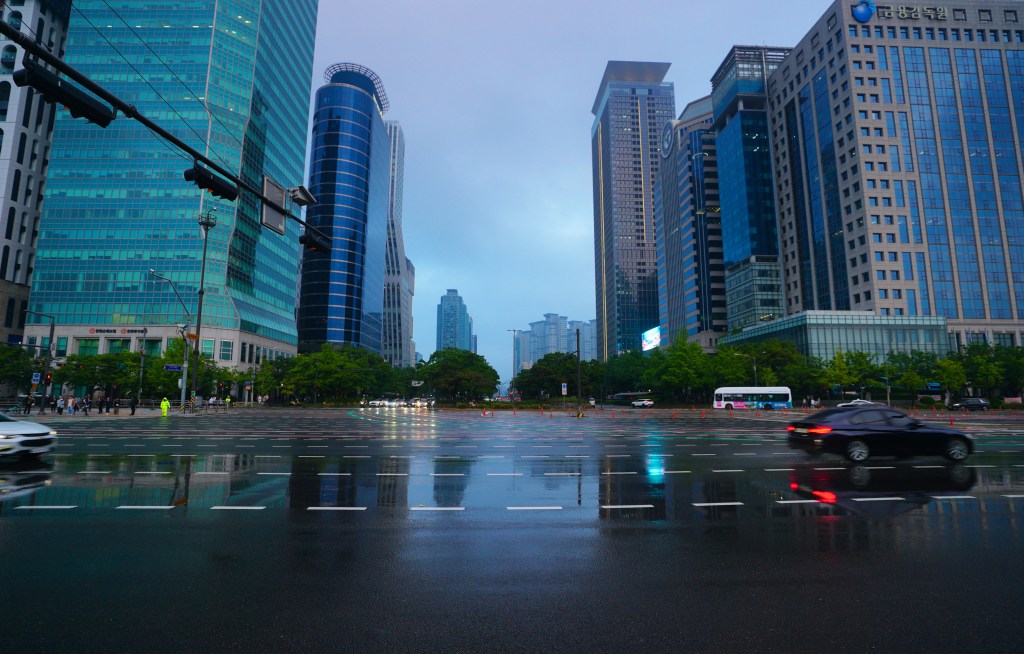
Of the many reasons I left India, a few were my repulsiveness towards the all too common problems of India. Piles of trash accumulating in street corners, pollution, both Noise and Air, people spitting in public spaces, betel leaves or spittle, chaotic roads filled with vehicles moving in Brownian motion and stray dogs wandering about.
I moved to Jeju island, South Korea’s Hawaii, a tourist destination, where the roads were pristine and the views, picture postcard perfect. I was astonished by the lack of constant honking, the absence of motorbikes and tuktuks weaving across traffic haphazardly, uninterrupted sidewalks and vehicles maintaining lane discipline. Within the first week, I had made up my mind. I wasn’t going to go back to India. I could get used to some sort of order in my life, finally. I lived for 2 years on Jeju National University premises, located far from the residential areas of Jeju island, the university even more quaint and serene.
Fast forward 4 years. I was living in Gwangju, a city in the south western part of South Korea. On weekends, I used to frequent USquare, the main Bus stand in Gwangju. This was more than just a Bus stand. It had an iMax movie theatre, a book shop, restaurants and an outdoor concert venue. The Bus stand had better facilities than some airports I had been to in India.
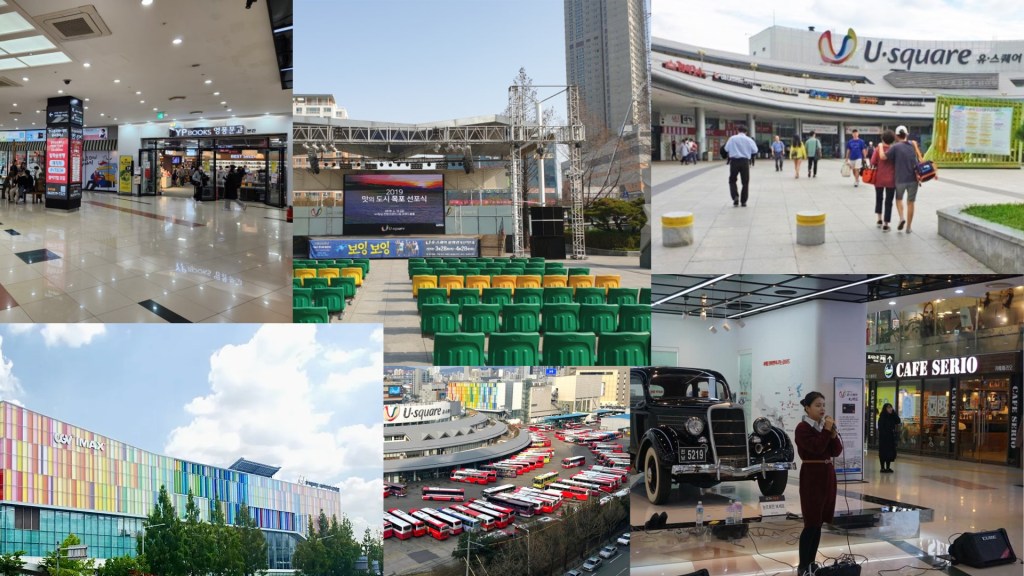
When entering USquare, I’d have go through these swinging doors and every time I entered, I’d hold the door open for the person behind me, only for the person to not so much as acknowledge my existence or offer a nod of gratitude. There were times, I was left holding the door open for at least 5-10 people, each of whom waltzed through, as determined as a marathoner aiming for the finish line completely oblivious to my presence. I began to wonder if they assumed I was moonlighting as a door man on weekends.
Now, if you’re itching to jump ahead and label an entire country of people as devoid of etiquette, just bear with me. In my experience, Koreans, mostly keep to themselves in public spaces and find small talk with strangers as awkward as the Pope in a brothel. One eye contact could potentially lead to minutes of unwanted interaction. Nobody wants that. When in awkward situation, what would the Pope do?. Keep his head down and keep walking. Koreans, I suppose, are merely doing as the Pope does.
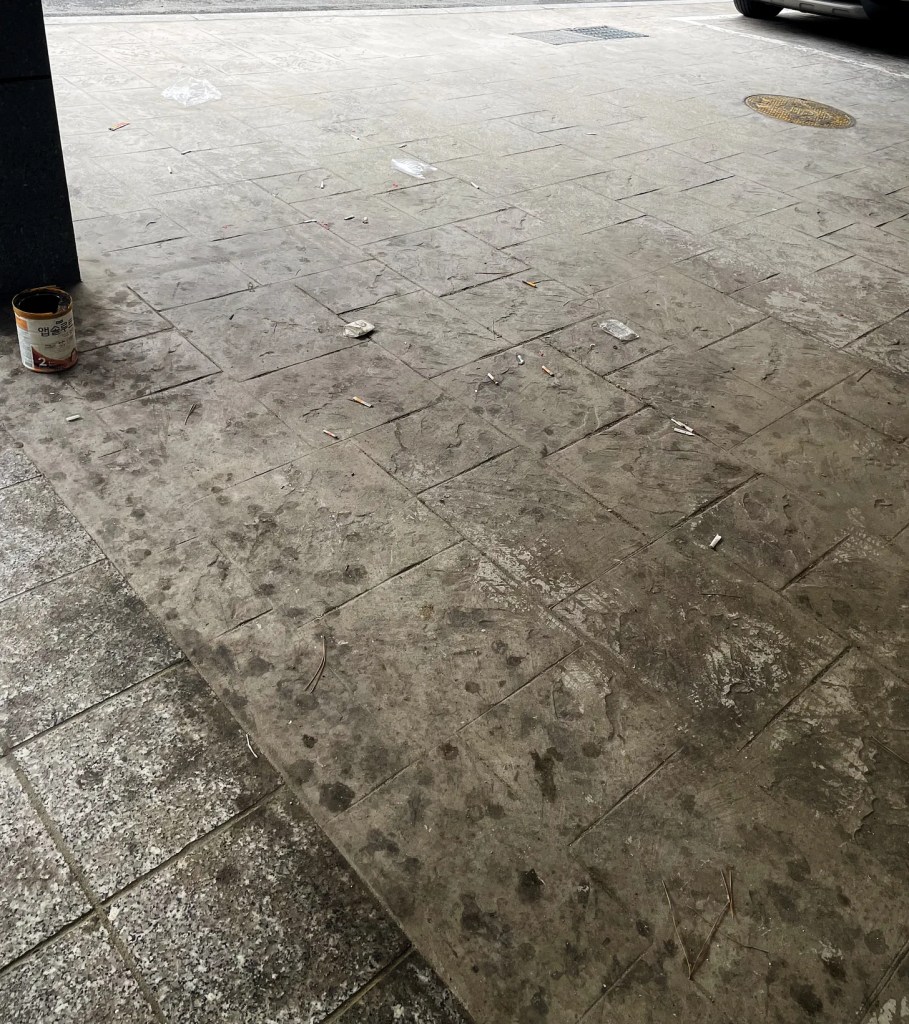
I wasn’t earning plenty working in Gwangju, but just enough to afford myself a decent enough place to stay. Staying in a residential apartment was my first exposure to cigarette smokers in Korea. As much as I loathe cigarettes and can’t stand the smell, the cigarettes were the least of my worries. What truly revolted me were the spools of spit around the apartment entrance. You’d have to be a primeval Neanderthal to spit at the entrance of your own residence.
It got worse in winter, when these primeval Nean… animals I shared the building with, started spitting inside the building, right next to the hallway windows.
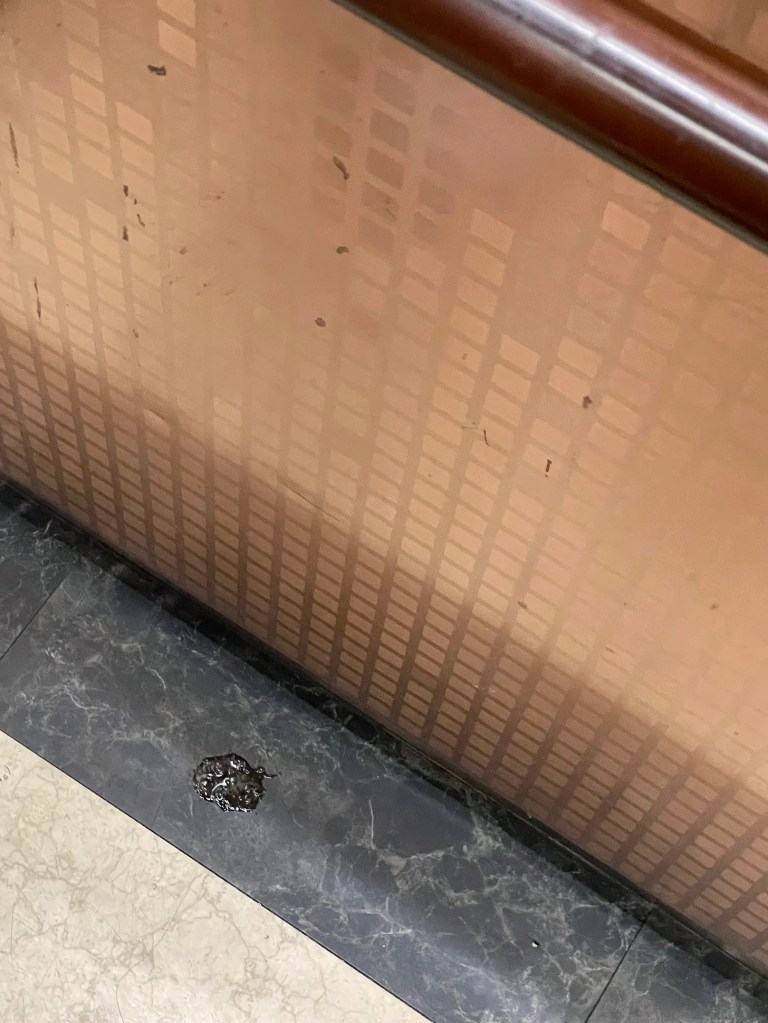
I moved to Seoul and it’s the same. The company I work for is in the Seocho area, a relatively expensive part of Seoul and even in such a nice area occasionally there are folks who spit within the elevator. It’s almost a monthly occurrence.
Ross Coomber, a professor of sociology at Plymouth University conducted an international spitting survey and spent the summer of 2013, traveling in Mumbai, Kuala Lumpur, Jakarta, Tokyo, Seoul and Shanghai, comparing the public spitting habits of different nations. He found that,
“ Spit is a many-faceted thing. The three most significant spitting nations are India, South Korea and China. For would-be students of spit, the spitting in Mumbai was mainly connected to the chewing of betel nut, in South Korea it was closely linked to smoking, and in China to a distaste for swallowing. ”
In 1922, the French senate approved a law that prohibited spitting in public spaces. But the French, proud of their history of rebellion and protests, which they call their tradition contestataire, protested against this new law. Similar anti-spitting laws were passed in UK, Spain and Germany in the early 20th century, but these laws took years to become a habit. Under the Punishment of Minor Offenses Act, public spitting is classified as a misdemeanor in South Korea. Specifically, individuals who spit or urinate in public places such as streets or parks can be fined up to 100,000 KRW (approximately $88 USD) , but it is rarely enforced. The younger generation is smoking less thanbefore and I hope spitting lesser. The government is spearheading anti-smoking campaigns to reduce the number of active smokers. One local government even provided 5 million Korean won (4300 USD) to those who quit smoking. But these changes don’t happen overnight.
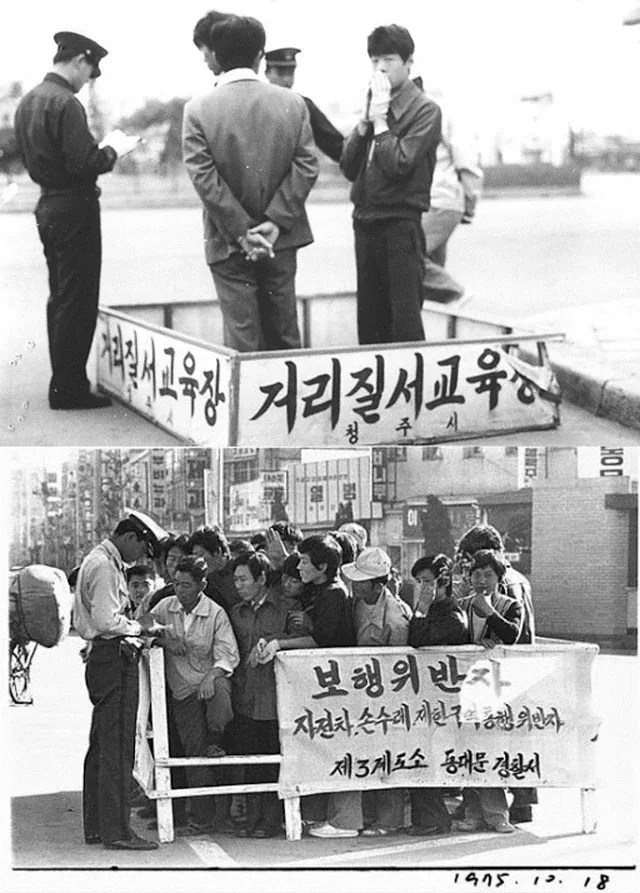
During the 1970s, when South Korea began its transformation to an economically developed country, people were publicly shamed to enforce traffic rules. If you were caught jaywalking, you were forced to stand in the box of shame for 30 minutes.
Whether it’s standing in line or taking the subway, it’s usually the older generation who jump the queue or barge through crowds without any regard for those around them. The younger generation is certainly more socially conscious. Korea’s rise as a developed country is often lauded and admired. Hopefully, someday, people will sing the praises, without the spittle, of South Korea’s social progress as well.


 AVILLAGEOFBIGHEADS
Leave a comment